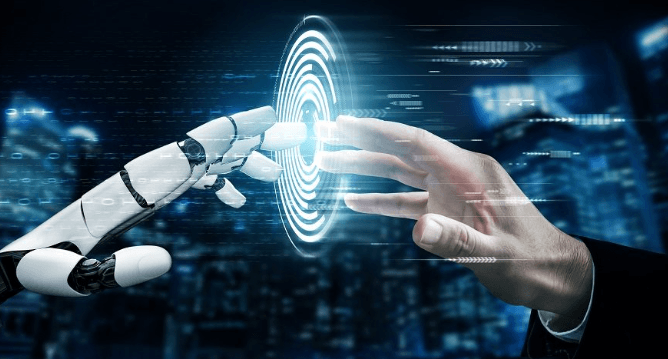
The future of human–tech collaboration unfolds as a layered ecosystem where meaning and intent rest with people, while machines amplify speed, patterning, and synthesis. Governance becomes transparent and adaptive, not tethered to hierarchy, enabling co-creation across work and learning. Ethical self-regulation and probabilistic foresight shape trajectories toward equitable outcomes. Hybrid cognition and iterative practice may redefine roles, yet questions about trust, autonomy, and governance linger, inviting ongoing scrutiny as systems scale and contexts shift.
What Is Human-Tech Collaboration Today
Human–tech collaboration today operates as an interconnected ecosystem where humans guide meaning and intention while machines handle scale, speed, and pattern recognition; the relationship is increasingly symbiotic rather than hierarchical.
In this landscape, AI governance structures emerge to balance trust and accountability, while creativity augmentation expands novelty with disciplined autonomy; outcomes favor freedom, resilience, and probabilistic foresight across diverse cognitive domains.
Co-Creation at Work and in Classrooms
As organizations and educational institutions increasingly operate as interconnected ecosystems, co-creation emerges as the default method by which people and intelligent systems jointly generate outcomes.
In workplaces and classrooms, co creation workflows enable iterative learning, shared responsibility, and adaptive problem solving.
Probabilistic forecasting suggests classroom partnerships and collaborative tools will redefine authority, metrics, and success, fostering liberated, resilient organizational cultures.
Ethics, Autonomy, and Trust in Intelligent Systems
How might autonomy, ethics, and trust co-evolve as intelligent systems become more embedded in decision pipelines? These systems may increasingly reveal ethics delegation paths while preserving user agency, balancing reliability with freedom. Autonomy transparency could become a policy norm, enabling auditability and adaptive governance. Probabilistic forecasts suggest layered safeguards, fostering trust without sacrificing exploration, resilience, or creative autonomy in human-technology collaboration.
Skills and Mindsets for a Hybrid Future
What competencies and dispositions will organisms of hybrid cognition rely on as decision ecosystems blend human judgment with machine inference?
Curiosity amplification and adaptive collaboration emerge as core catalysts, cultivating probabilistic thinking, ethical self-regulation, and transparent reasoning.
Teams synthesize diverse inputs, embracing uncertainty, learning loops, and rapid iteration.
Freedom-minded individuals navigate ambiguity, steward context, and align machine insights with humane goals, enabling resilient, equitable innovation.
See also: garudavip88com
Frequently Asked Questions
How Will AI Mentors Adapt to Individual Learning Styles?
AI mentors adapt to individual learning styles by calibrating adaptive pacing and delivering reflective feedback, enabling autonomous, speculative learners to explore diverse problem spaces; systemic patterns emerge, probabilistic trajectories materialize, and freedom-seeking minds navigate personalized, resilient knowledge ecosystems.
What Safeguards Prevent Overreliance on Automation in Daily Tasks?
Practical protections prevent overreliance: persistent privacy risks flagged, bias mitigation built in, and robust human oversight remains. The speculative system safeguards emphasize self-dowering vigilance, decentralized decision checks, probabilistic forecasts, and freedom-oriented, transparent task boundaries.
Can Humans Regain Agency When Systems Automate Decision-Making?
Humans may regain agency when systems automate decision-making, though agency loss persists; resilient design and transparent proxies support decision autonomy, enabling probabilistic foresight, systemic thinking, and freedoms-based choices within probabilistic risk assessments and adaptable governance.
How Do We Measure Real Collaboration Versus Simulated Collaboration?
“Like a bell tolling in a controlled wind,” the distinction lies in observable joint contribution rather than scripted mimicry; measurable empathy and tangible impact frame evaluation, guiding speculative foresight with systemic, probabilistic thinking toward freedom-oriented collaboration.
What Roles Will Entirely Human-Driven Careers Play Tomorrow?
Today, wholly human-driven careers persist as independent entrepreneurship and creative leadership shape adaptive ecosystems, where individuals navigate uncertainty with probabilistic foresight, cultivating freedom through autonomy, collaboration, and systemic thinking beyond scripted automation.
Conclusion
In contemplating a world where humans steer meaning while machines amplify scale, collaboration becomes a probabilistic ecosystem rather than a command chain. If current trends hold, adaptive co-creation could cut project cycles by up to 40%, while hybrid classrooms boost interdisciplinary fluency by similar margins. Yet governance remains pivotal: layered safeguards and transparent metrics will steer innovation toward humane goals. The future hinges on trust, resilience, and continuous iteration, enabling equitable flourishing at the nexus of insight and automation.